Original Article
HJOG 2026, 25 (3), 208-217 | doi: 10.33574/hjog.0629
Sanika Aphale1, Sumedh Joshi2, Swati Gaikwad3, Meenakshi Pandey4, Sujata Kadam5
1PG scholar, Dept. of Prasuti Tantra & Stri Roga, All India Institute of Ayurveda, New Delhi
2PhD scholar, Dept. of Dravyaguna, All India Institute of Ayurveda, New Delhi
3Associate Professor, Dept. of Prasuti Tantra & Stri Roga, All India Institute of Ayurveda, New Delhi
4Associate Professor, Dept. of Prasuti Tantra & Stri Roga, All India Institute of Ayurveda, New Delhi
5Professor and Head, Dept. of Prasuti Tantra & Stri Roga, All India Institute of Ayurveda, New Delhi
Correspondence: Dr Sumedh Joshi, PhD scholar, All India Institute of Ayurveda, Sarita Vihar New Delhi 110044, Tel.: 8856951935, e-mail: sumedhjoshi10395@gmail.com

Abstract
Background: Seed Oil of herb Ricinus communis L. (commonly known as castor oil or Eranda Taila in sanskrit) has traditionally been used to induce labor. However, its mode of action as well as underlying molecular mechanisms remain unclear. In alignment with the principles of reverse pharmacology, the present in silico study was undertaken to bridge this gap and investigate the mechanistic insights regarding the labor induction pathways targeted by phytochemicals in Castor oil
Methods: Bioactive compounds of Ricinus communis L. were retrieved from phytochemical databases and literature, followed by ADME screening using the software Swiss ADME. Eight compounds fulfilling drug-likeness criteria were selected for target prediction. Labor induction–related genes were obtained from gene cards and relevant published research articles. Common targets were identified and analysed through protein-protein interaction (PPI) networks using STRING and hub gene analysis through the software Cyto-Hubba. Gene Ontology (GO) and KEGG pathway enrichment were also performed.
Results: A total of 112 common targets between castor oil and labor induction were identified. Hub gene analysis highlighted NF-κB1, IL6, PTGS2, and MMP9. GO and KEGG analysis revealed enrichment in inflammatory and immune-related pathways, particularly the TNF and NF-κB signalling pathways. Palmitic acid and Oleic acid were identified as key active compounds.
Conclusion: Castor oil may induce labor by modulating key inflammatory and immunoregulatory pathways. These findings support its traditional as well as ethnomedicinal use and provide a scientific basis for its mechanism of action in parturition.
Key words: Castor oil, labor induction, in silico, Ricinus communis, NF-κB
Introduction
The process of parturition is a complex physiological event defined by four sequential yet overlapping phases that guide the transition from pregnancy to postpartum recovery. Phase 1 involves uterine quiescence and cervical softening; Phase 2 is the activation phase, marked by cervical ripening and increased uterine responsiveness; Phase 3 is the stimulation phase, characterized by active labor, coordinated contractions, and delivery of the fetus; and Phase 4 encompasses involution and cervical repair¹. The onset of labor is regulated by intricate mechanisms, primarily theorized to involve the withdrawal of pregnancy-maintaining factors like progesterone, the synthesis of labor-promoting substances, and fetal maturation signals such as adrenocorticotropic hormone (ACTH)².
When these regulatory mechanisms fail, pregnancy may extend beyond the optimal duration. The absence of spontaneous labor onset can be attributed to predisposing factors such as primiparity, obesity, genetic predisposition, placental sulfatase deficiency, or a history of post-term pregnancy³. A post-dated pregnancy extends beyond 40 weeks (280 days), while a post-term pregnancy reaches or exceeds 42 weeks (294 days)⁴. Prolonged gestation increases the risk of severe maternal and fetal complications, including oligohydramnios, meconium aspiration, macrosomia, stillbirth, and a higher incidence of caesarean delivery⁵. To mitigate these risks, Induction of Labor (IOL) is frequently recommended.
In India, the prevalence of labor induction is approximately 22%⁶. Modern pharmacological agents used for induction include Misoprostol, Dinoprostone, Oxytocin, and occasionally Mifepristone, which facilitate cervical ripening and uterine contractions. Alongside these agents, traditional medicine has long utilized natural remedies for similar purposes. Ricinus communis L., commonly known as Castor oil (Eranda Taila), is a vegetable oil derived from seeds that has been widely recognized in ethnomedicine for its laxative, anti-inflammatory, analgesic, and labor-inducing properties⁷. Clinical research has substantiated the efficacy of castor oil in inducing labor, yet its precise mode of action and underlying molecular mechanisms remain largely unclear⁸.
This study employs Reverse Pharmacology, a discipline that inverts the conventional drug discovery model by starting with clinically observed effects and proceeding to mechanistic validation⁹. In alignment with these principles, the present in silico study was undertaken to bridge the knowledge gap regarding castor oil’s utility in obstetrics. The objective of this article is to provide mechanistic insights into the pathways and targets of castor oil involved in the induction of labor, thereby offering a scientific basis for its traditional application.
Materials and Methods
Active compounds in Ricinus communis:
Information on bioactives of castor oil was retrieved from literature and publicly available databases. The bioactive compounds were collected from the phytochemical-based Indian Medicinal Plants, Phytochemistry, and Therapeutics (IMPPAT)10 database and articles on HR-LCMS of castor oil. The keyword “Ricinus communis” was used in the databases. PubChem 11 was used to collect the chemical information of bioactive compounds, such as PubChem ID, structure, and molecular weight as shown in Table 1.
Absorption, distribution, metabolism, and excretion (ADME) screening of active phytoconstituents in Ricinus communis:
The SMILES (simplified molecular-input line-entry system) were searched for bioactive compounds identified from literature and publicly available databases of Castor oil (Ricinus communis) as shown in Table 2. The SMILES were screened for human gastrointestinal absorption (HIA), Drug-likeness etc using Swiss ADME (http://www.swissadme.ch/) [12] software. Phytoconstituents having bioavailability of more than 0.40 were retained.
Targets prediction of ADME-qualified phytoconstituents:
Targets of the ADME-qualified bioactives were retrieved from Swiss Target Prediction (http://www.swisstargetprediction.ch/)13, CTD database and those showing targets with a probability of more than 0.7 were only selected for study.
Retrieval of targets for IOL
Targets of IOL were obtained by keyword “induction of labor” from Gene Cards (https://www.genecards.org/)14.
Identification of relevant targets of Castor oil in IOL
Common targets of Castor oil in IOL were identified using bio-informatics venn-diagram15. Alternatively, another list of targets common between castor oil and IOL based on the available literature was retrieved.
Other Human Protein and Protein-Protein Interaction Data
The data of other human protein and protein-protein interaction (PPI) came from String16, with the species limited to “Homo sapiens” and a confidence score >0.4.String (http://string-db.org/, ver. 10) is a database of known and forecasted protein-protein interactions and In Act (http://www.ebi.ac.uk/intact/, ver. 4.2.4) provides an open source database and analysis tools for molecular interaction data.
Identification of top targets
Using the common targets and the PPI derived from string database, top targets were retrieved using cyto-hubba.
Network construction, Gene Ontology, and KEGG enrichment analysis
The herb–bioactive–target network was constructed and visualized by Cytoscape 3.9.1. (Cytoscape Developer: Institute of system biology in Seattle, US) Degree, betweenness centrality, and closeness centrality indicating the topological importance of nodes in the network were analysed by the Network Analyzer Tool in Cyto-scape17. Using Kyoto Encyclopaedia of Genes and Genomes (KEGG)18 pathway enrichment analyses of targets was done.
Results
Pharmacokinetic Profiling and Draggability Assessment of Ricinus communis Constituents
To evaluate the therapeutic potential of Ricinus communis, the retrieved phytoconstituents underwent a rigorous in silico pharmacokinetic assessment. The screening protocol prioritized compounds exhibiting optimal “drug-like” properties based on ADME (Absorption, Distribution, Metabolism, and Excretion) descriptors.
Key inclusion criteria involved a bioavailability score >0.55 and high gastrointestinal (GI) absorption, ensuring sufficient systemic exposure following oral administration. Furthermore, the molecular physicochemical properties were scrutinized against Lipinski’s Rule of Five (Ro5) to predict oral draggability. The BOILED-Egg model (Brain or Intestinal Estimate D permeation method) was utilized to concurrently predict GI absorption and blood-brain barrier (BBB) permeation. Out of the nine initially identified phytochemicals, eight demonstrated superior pharmacokinetic profiles, satisfying the requisite thresholds for bioavailability and membrane permeability. These eight bioactive moieties were deemed suitable lead candidates and retained for downstream target prediction as shown in Table 2. The detailed physicochemical descriptors and ADME compliance data are tabulated in Supplementary Table S1.
Identification of Compound-Specific and Disease-Associated Targets
To elucidate the molecular mechanism of action, a dual-directional target fishing approach was employed.
First, the biological targets for the eight ADME-screened phytoconstituents were predicted, yielding 742 unique putative targets (Supplementary Table S2). This broad target spectrum reflects the poly-pharmacological nature of the herbal constituents.
Simultaneously, the genetic landscape of Induction of Labor (IOL) was mapped by mining the Gene Cards database. This search retrieved 730 disease-associated targets implicated in the physiological and pathological pathways of labor (Supplementary Table S3). This dataset represents the “disease module,” encompassing genes involved in uterine contractility, cervical ripening, and inflammatory signalling.
Construction of the Therapeutic Target Intersection
To isolate the specific genomic interactions responsible for the labor-inducing efficacy of R. communis, a Venn analysis was conducted to map the intersection between the phytoconstituent target space and the IOL disease module.
The cross-referencing revealed 112 common targets. These intersecting genes represent the core “drug-disease” therapeutic interactome, suggesting that R. communis likely modulates IOL by perturbing these specific biological nodes rather than acting on a single pathway. The complete list of these potential therapeutic targets is provided in Supplementary Table S4.
PPI Network Topology and Hub Gene Identification via MCC Algorithm
To decipher the functional hierarchy within the 112 therapeutic targets, a Protein-Protein Interaction (PPI) network was constructed. Understanding the topology of this network is crucial for identifying key regulatory proteins (“hubs”) that maintain network stability and signal transduction.
The topological analysis was performed using the Cyto-Hubba plugin in Cytoscape. While various centrality measures exist (e.g., Degree, Betweenness), the Maximal Clique Centrality (MCC) algorithm was selected for this study. MCC has been demonstrated to possess superior accuracy in predicting essential proteins within complex biological networks compared to other centrality metrics. Based on the MCC scoring, the top 20 hub genes were extracted (Figure 1). These high-scoring nodes likely represent the primary signalling mediators through which R. communis exerts its uterotonic effects.
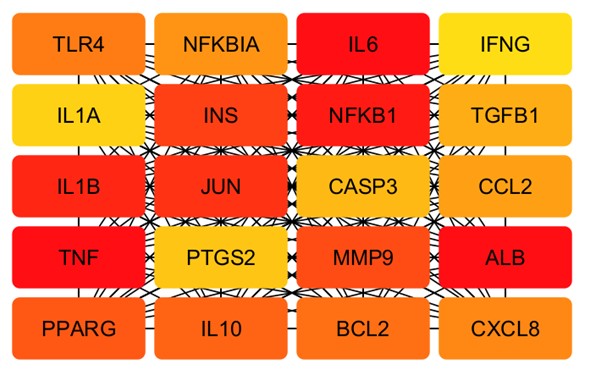
Figure 1. Top 20 Hub genes as per MCC.
Construction of the Compound-Target-Disease (C-T-D) Network
To visualize the multi-scale therapeutic mechanisms, a holistic Compound-Target-Disease (C-T-D) network was generated using Cytoscape. The resulting network consists of 9 nodes and 36 edges as shown in figure 2, delineating the complex interactions between the active constituents (e.g., Ricinoleic acid, alpha-pinene, etc.) and the identified hub targets.
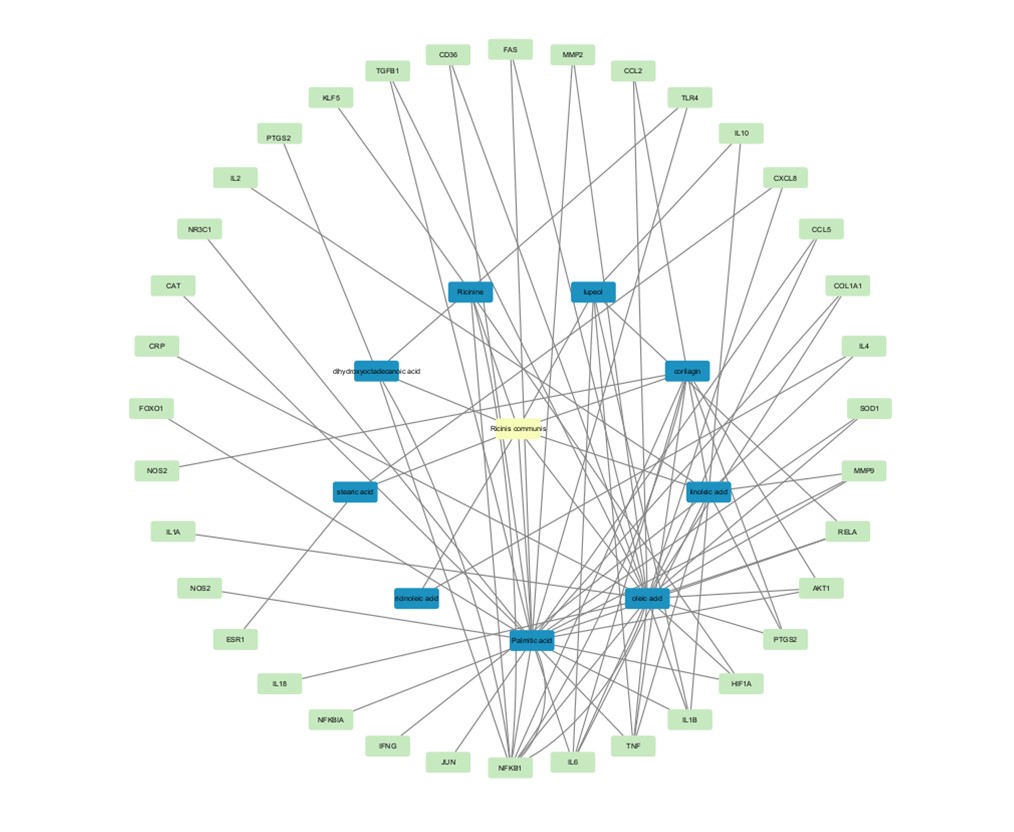
Figure 2. Network constructed using cytoscape.
The network topology reveals a dense connectivity pattern, confirming the “multi-component, multi-target, multi-pathway” mechanism of R. communis. This visualization provides a systemic rationale for the traditional use of Castor oil, highlighting how multiple phytochemicals synergistically modulate a specific subset of labor-associated genes.
Molecular docking
To structurally validate the interactions predicted by the network pharmacology analysis, molecular docking studies were conducted on the two key phytoconstituents, Palmitic acid and Oleic acid structure shown in figure 3, against a prioritized panel of ten targets involved in the inflammatory signalling of parturition as shown in Table 3 and structures displayed in figure 4. The docking analysis focused on verifying binding affinities with the high-degree hub genes identified in the PPI network, specifically PTGS2 (COX-2), MMP9, IL6, and the NF-κB complex (p50 and IκBα).
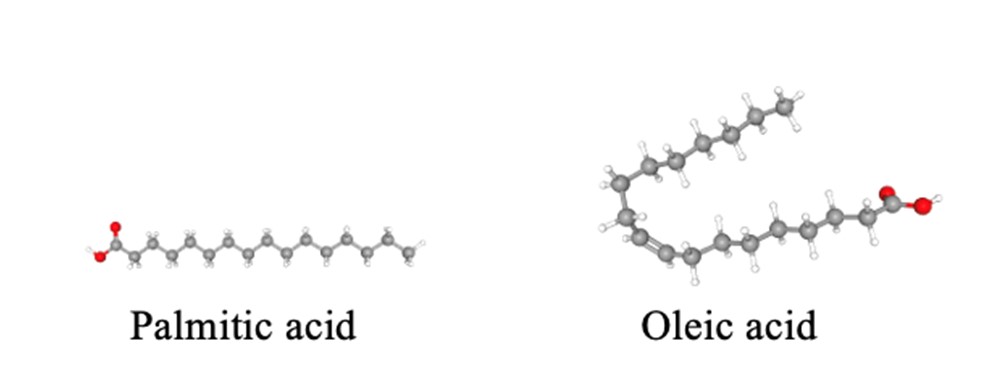
Figure 3. Structures of phytochemicals.
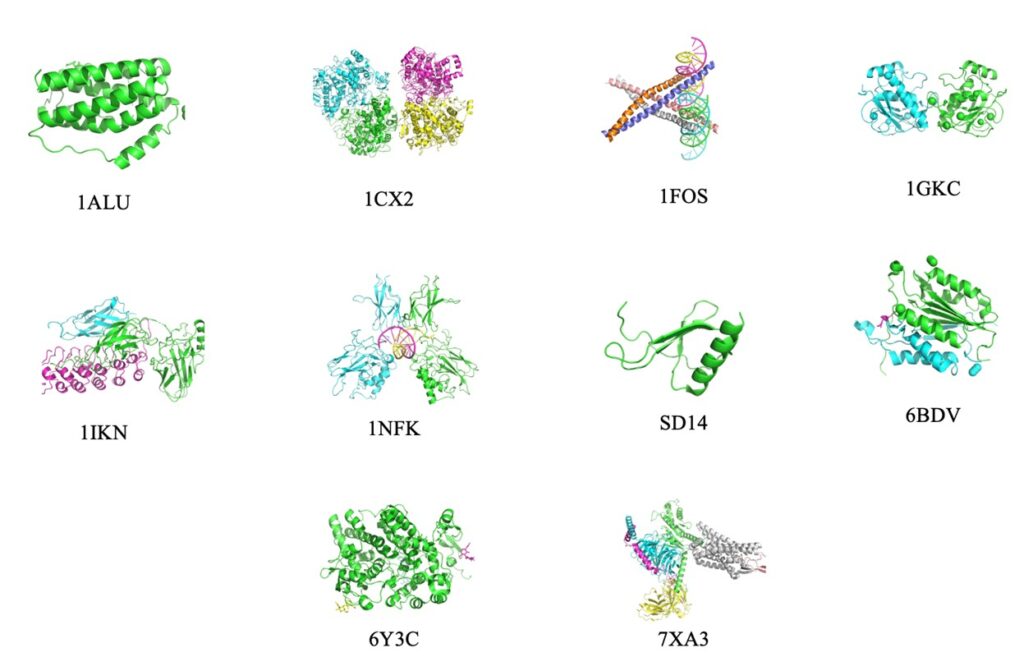
Figure 4. Structures of target proteins.
The simulation results as shown in Table 4 indicated that both Palmitic and Oleic acid fit favourably within the active pockets of the cyclooxygenase enzymes (COX-1 and COX-2), which are the rate-limiting enzymes in the arachidonic acid pathway responsible for synthesizing prostaglandins (PGE2 and PGF2α)—the primary mediators of uterine contraction. Furthermore, favourable binding was observed with MMP-9, an enzyme critical for collagen degradation during cervical ripening, and with the NF-κB signalling components, which serve as the master transcriptional regulators of the inflammatory cascade. By physically interacting with these targets, the identified fatty acids may modulate the downstream expression of pro-labor cytokines (IL-6, IL-8) and chemokines (CCR2), thereby mechanically triggering the transition from uterine quiescence to active labor.
Discussion
The contemporary landscape of drug discovery is undergoing a paradigm shift, moving away from the high-attrition bench-to-bedside model toward “Reverse Pharmacology. This transdisciplinary approach validates time-tested clinical remedies through rigorous mechanistic study, effectively inverting the conventional path to decode the pharmacodynamic basis of traditional medicines¹⁹.The present study adopts this framework to investigate Ricinus communis L. (Castor oil), a formulation historically entrenched in obstetric practice for induction of labor (IOL). While clinical meta-analyses have substantiated its efficacy, the molecular black box specifically how a complex lipid mixture orchestrates the precise physiological cascade of parturition has remained obscure. Our findings suggest that Castor oil does not act through a solitary pathway but rather functions as a poly-pharmacological agent, modulating a synchronized inflammatory network to break uterine quiescence.
Pharmacokinetic Profiling and Druggability A critical prerequisite for any oral uterotonic agent is its ability to bypass gastrointestinal degradation and achieve therapeutic systemic concentrations. Our in silico pharmacokinetic profiling subjected the phytochemical profile of Ricinus communis to rigorous ADME (Absorption, Distribution, Metabolism, and Excretion) screening. Of the nine primary phytoconstituents identified, eight—including Ricinine, Stearic acid, Ricinoleic acid, and Oleic acid—demonstrated a bioavailability score >0.55. These compounds adhered strictly to Lipinski’s Rule of Five, a gold-standard filter for drug-likeness, which predicts oral bioavailability based on physicochemical stability (e.g., molecular weight <500 Da, LogP <5, and hydrogen bonding capacity)²⁰.
The exclusion of Corilagin due to poor bioavailability highlights the selectivity of our screening process. Importantly, while Ricinoleic acid has traditionally monopolized scientific attention due to its action on intestinal EP3 receptors, our network topology analysis revealed that common dietary fatty acids, specifically Palmitic acid and Oleic acid, act as critical hub compounds. This suggests that the labor-inducing potential of Castor oil is not solely dependent on a single unique compound but relies on the synergistic systemic action of its lipid profile.
The Inflammation Hypothesis of Labor Physiologically, the transition from pregnancy to labor is increasingly understood as a sterile inflammatory event. The quiescent uterus is maintained by progesterone, while the onset of labor is characterized by an influx of leukocytes and a surge in pro-inflammatory cytokines²¹. Our network pharmacology analysis strongly corroborates this inflammation hypothesis. The construction of a Compound-Target-Disease (C-T-D) network revealed 112 common targets, with hub gene analysis identifying NF-κB1, IL6, PTGS2 (COX-2), and MMP9 as the central nodes. This indicates that Ricinus communis initiates labor by amplifying these endogenous inflammatory signals, effectively tipping the balance from maintenance to expulsion.
Mechanistic Pathways: The NF-κB and TNF Axis The study identified the Tumour Necrosis Factor (TNF) and Nuclear Factor Kappa B (NF-κB) signalling pathways as the primary mechanistic targets.
- NF-κB Modulation: The NF-κB complex acts as the master transcriptional switch for inflammation in gestational tissues. During late pregnancy, its activation and nuclear translocation are prerequisites for the expression of “contraction-associated proteins” (CAPs), such as oxytocin receptors (OXTR) and gap junction proteins (Connexin-43)²². Our docking data suggests that Palmitic and Oleic acids physically interact with the NF-κB complex (p50/IκBα), potentially preventing its inhibition or promoting its activation, thereby driving the transcription of pro-labor cytokines.
- TNF Signalling: TNF-α is a pivotal cytokine that rises naturally in the amnion and myometrium at term. It functions as a paracrine signal that promotes leukocyte infiltration and upregulates prostaglandin synthesis²³, By targeting the TNF signalling pathway, Castor oil constituents likely mimic physiological stress signals, creating a feed-forward loop that accelerates the inflammatory transition required for labor onset²⁴.
Dual Action: Prostaglandin Synthesis and Cervical remodelling the transition to labor requires two coordinated physical changes: uterine contractility and cervical softening. Our molecular docking results provide a structural basis for this dual action.
- Chemical Trigger (PTGS2/COX-2): The docking simulation revealed favorable binding of active lipids to Cyclooxygenase-2 (PTGS2). COX-2 is the rate-limiting enzyme that converts arachidonic acid into prostaglandins (PGE2 and PGF2α). These prostaglandins are potent uterotonics that directly stimulate myometrial contractions.
- Mechanical Preparation (MMP-9): Concurrently, the study highlighted Matrix Metallopeptidase 9 (MMP-9) as a key target. MMP-9 is a collagenase responsible for degrading the extracellular matrix of the cervix.²⁵ Its modulation implies that Castor oil facilitates cervical ripening—the process of softening and effacement—which is clinically critical for successful vaginal delivery.
Conclusion
This study utilizes computational biology to validate the ethnomedicinal application of Ricinus communis. The mechanism of action is defined by a “multi-component, multi-target” synergy, where bioactive fatty acids (Palmitic and Oleic) modulate the NF-κB and TNF pathways. This modulation appears to trigger a cascade that upregulates prostaglandins and activates cervical collagenases, effectively orchestrating the complex physiological transition to active labor. These findings provide a robust molecular rationale for the clinical use of Castor oil and warrant further validation through high-resolution metabolomics and in vivo models²⁶.
Limitations and Future Scope
Given the complexity of the molecular interactions, future work will involve high-resolution LC–MS analysis to quantify the proportion of active phytoconstituents, followed by systematic docking and molecular dynamics simulations. These advanced analyses remain beyond the scope of the current study. Future studies can be undertaken to assess the toxicity and cellular absorption related data of the use of castor oil in induction of labor.
Abbreviations:
ACTH: Adrenocorticotropic Hormone
ADME: Absorption, Distribution, Metabolism, and Excretion
CASP3: Caspase 3
CCL2: C-C Motif Chemokine Ligand 2
CXCL8: C-X-C Motif Chemokine Ligand 8
GIT: Gastrointestinal Tract
GO: Gene Ontology
HIA: Human Gastrointestinal Absorption
HR-LCMS: High-Resolution Liquid Chromatography-Mass Spectrometry
IL6: Interleukin 6
IMPPAT: Indian Medicinal Plants, Phytochemistry, and Therapeutics
IOL: Induction of Labor
JUN: Jun Proto-Oncogene
KEGG: Kyoto Encyclopedia of Genes and Genomes
MCC: Maximal Clique Centrality (cytoHubba method)
MMP9: Matrix Metallopeptidase 9
NF-κB: Nuclear Factor Kappa B
NFKBIA: NFKB Inhibitor Alpha
PPI: Protein-Protein Interaction
PTGS2: Prostaglandin-Endoperoxide Synthase 2
SMILES: Simplified Molecular-Input Line-Entry System
TNF: Tumour Necrosis Factor
Financial Support
This research did not receive any specific grant from funding agencies in the public, commercial, or not-for-profit sectors.
Conflict of Interest
Nil
References
- Jennifer M, Meenakshi R. Mechanisms and management of normal labor. Obstetrics Gynaecology & Reproductive Medicine. 2023;33:160-167.
- Vanora H, Soo D, Sarah J. The initiation of labor at term gestation: Physiology and practice implications. Best Practice & Research Clinical Obstetrics & Gynaecology. 2020;67:4-18.
- Galal M, Symonds I, Murray H, Petraglia F, Smith R. Post term pregnancy. Facts Views Vis Obgyn. 2012;4(3):175-87.
- Sara L, Catherine A. Prolonged pregnancy: balancing risks and interventions for post-term gestations. Obstetrics, Gynaecology & Reproductive Medicine. 2024;33(5):127-133.
- Galal M, Symonds I, Murray H, Petraglia F, Smith R. Post term pregnancy. Facts Views Vis Obgyn. 2012;4(3):175-87.
- Tripathy P, Pati T, Baby P, et al. Prevalence and predictors of failed Induction. Int J Pharm Sci Rev Res. 2016;39(2):189–194.
- Abomughaid MM, Teibo JO, Akinfe OA, et al. A phytochemical and pharmacological review of Ricinus communis L. Discov Appl Sci. 2024;6:315.
- Moradi M, Niazi A, Mazloumi E, Lopez V. Effect of Castor Oil on Cervical Ripening and Labor Induction: a systematic review and meta-analysis. J Pharmacopuncture. 2022;25(2):71-78.
- Surh YJ. Reverse pharmacology applicable for botanical drug development – inspiration from the legacy of traditional wisdom. J Tradit Complement Med. 2011;1(1):5-7.
- Mohanraj K, Karthikeyan BS, Vivek-Ananth RP, Bharath Chand RP, Aparna SR, Mangalapandi P, et al. IMPPAT: A curated database of Indian medicinal plants, phytochemistry and therapeutics. Sci Rep 2018;8:43.
- Wang Y, Xiao J, Suzek TO, Zhang J, Wang J, Bryant SH. PubChem: A public information system for analyzing bioactivities of small molecules. Nucleic Acids Res 2009;37:W623–33.
- Daina A, Michielin O, Zoete V. SwissADMEA free web tool to evaluate pharmacokinetics, drug-likeness and medicinal chemistry friendliness of small molecules. Sci Rep 2017;7:42717.
- Daina A, Michielin O, Zoete V. SwissTargetPrediction: Updated data and new features for efficient prediction of protein targets of small molecules. Nucleic Acids Res 2019;47:W357–64.
- Stelzer G, Rosen N, Plaschkes I, Zimmerman S, Twik M, Fishilevich S, et al. The GeneCards suite: From gene data mining to disease genome sequence analyses. Curr Protoc Bioinformatics 2016;54:1.30.1–1.30.33.
- Hulsen T, de Vlieg J, Alkema W. BioVenn – a web application for the comparison and visualization of biological lists using area-proportional Venn diagrams. BMC Genomics.2008;9,488.
- Szklarczyk, D. et al. The STRING database in 2023: protein–protein association networks and functional enrichment analyses for any sequenced genome of interest. Nucleic Acids Res.2023;51(D1), D638–D646.
- Otasek D, Morris JH, Bouças J, Pico AR, Demchak B. Cytoscape automation: Empowering workflow-based network analysis. Genome Biol 2019;20:185.
- Kanehisa, M. et al. KEGG for taxonomy-based analysis of pathways and genomes. Nucleic Acids Res.2023;51(D1), D587–D592.
- Surh YJ. Reverse pharmacology applicable for botanical drug development – inspiration from the legacy of traditional wisdom. J Tradit Complement Med. 2011;1(1):5-7.
- Benet LZ, Hosey CM, Ursu O, Oprea TI. BDDCS, the Rule of 5 and drugability. Adv Drug Deliv Rev. 2016;101:89-98.
- Gomez-Chavez F, Correa D, Navarrete-Meneses P, et al. NF-κB and Its Regulators During Pregnancy. Front Immunol. 2021;12:679106.
- Hayden MS, Ghosh S. Regulation of NF-κB by TNF family cytokines. Semin Immunol. 2014;26(3):253-66.
- Marvin KW. Use of cDNA Arrays to Generate Differential Expression Profiles for Inflammatory Genes in Human Gestational Membranes Delivered At Term and Preterm. Mol Hum Reprod. 2002;8(4):399-408.
- Romanowska-Prochnicka K, Felis-Giemza A, Olesinska M, et al. The Role of TNF-α and Anti-TNF-α Agents during Preconception, Pregnancy, and Breastfeeding. Int J Mol Sci. 2021;22(6):2922.
- Vadillo-Ortega F, Estrada-Gutierrez G. Role of matrix metalloproteinases in preterm labor. BJOG. 2005;112(Suppl 1):19-22.
- Hopkins AL. Network pharmacology: the next paradigm in drug discovery. Nat Chem Biol. 2008;4(11):682-90.