Original Article
HJOG 2026, 25 (4), 346-356 | doi: 10.33574/hjog.0641
Koptsi I1, Tsapekos D2, Papadimitriou K1, Athanasiadou E1, Goulis DG1
1Unit of Reproductive Endocrinology, First Department of Obstetrics and Gynecology, Aristotle University of Thessaloniki, Greece
2Department of Psychological Medicine, King’s College, London, United Kingdom
Correspondence: Koptsi Ioanna, Medical School Aristotle University of Thessaloniki, Unit of Reproductive Endocrinology First Department of Obstetrics and Gynaecology, Greece. Tel: 0030 6978424630, e-mail: ikoptsi@auth.gr, ORCID: 0000-0003-2325-3257

Abstract
Introduction: The announcement of the diagnosis of gestational diabetes mellitus (GDM) may disturb the pregnant woman’s mental health, affecting also emotional eating. The present study aimed to implement and evaluate a perinatal psychoeducation (PE) training program aiming to tackle these difficulties associated with GDM.
Materials & Methods: Twenty-five pregnant women diagnosed with GDM for the first time were recruited: 12 were randomly allocated to only receive treatment-as-usual (TAU) and 13 also participated in a 5-session psychoeducation program in addition to TAU (PE+TAU).
Results: The intervention was feasible to deliver and accepted well: 11 out of the 13 women in the PE+TAU group achieved treatment completion (85%). The effect of psychoeducation was evaluated through changes in BMI and self-report questionnaires, Cambridge Worrying Scale (CWS) and Mindful Eating Questionnaire (MEQ). Repeated measures ANOVA with age as a covariate showed a significant time-group interaction for BMI (lower in the PE+TAU group; η2 = 0.5, p < 0.001), but not significant interaction effects for CWS or MEQ.
Conclusions: Psychoeducation recipients appear to benefit from this intervention in preventing excessive weight gain during pregnancy complicated by GDM, while further indications are required for mindful eating and pregnancy concerns.
Keywords: Emotional eating, pregnancy, psychoeducation, intervention, GDM.
Introduction
Pregnancy causes biological, social and psychological changes in women’s lives, exacerbated by the presence of clinical and/or obstetric complications [1]. These complications can be considered as psychoactive facts and usually require specific therapeutic approaches. At the same time, psychological interventions can alleviate dysphoric symptoms caused by the diagnosis, and enhance compliance with the respective treatment [2, 3].
Pregnancy is an insulin-resistance condition, especially during the second trimester, through secretion of hormones. Therefore, it affects carbohydrate metabolism providing conditions for the development of gestational diabetes mellitus (GDM). If women with GDM left without proper medical care, they may give birth to overweight babies, who, in consequence, may develop diabetes and cardiovascular complications in their adult life [4, 5]. Across the lifespan, the risk progressively increases, with cumulative rates of type 2 diabetes approaching 70% within 28 years after a pregnancy complicated by GDM [6].
The announcement of the GDM diagnosis usually causes anxiety and depression [7, 8]. The latter can be associated either with negative emotions, such as sadness, fear, guilt and feelings of inadequacy. It can also trigger concerns of the child’s health and the course of the pregnancy; distortion of the body image; internal conflicts around nutrition, control, and pleasure [9, 10]. These dysphoric feelings often subside after a few weeks, and often do not meet the criteria for a formal diagnosis of a psychiatric disorder. However, disturbances that cause discomfort remain [11, 12]. Some patients diagnosed with GDM conform to the treatment, but many of them find it difficult to comply and adopt behaviours that are detrimental to their health [13, 14]. Therefore, the contribution of psychological support to women with GDM is essential, as it helps to better adhere to treatment [15, 16]. Interventions focused on emotional regulation, strengthening maternal identity and symbolic reunification of care without excessive control or guilt are highly recommended [4, 6].
Severe consequences of GDM to both pregnant women and infants have led to the development of multidisciplinary intervention programmes on GDM treatments in order to improve maternal and newborn health outcomes [17, 18]. Current interventions mainly focus on glucose monitoring dietary, pharmacological hypoglycaemic agents (insulin or oral hypoglycaemic agents), dietary and health education, physical activity and rarely on psychological support [19, 20]. However, the most effective therapeutic intervention seems to be interdisciplinary. Reviewed studies suggest these interventions to be performed by multidisciplinary teams, including a combination of physicians, midwives, dietitians, nurses and psychologists [2, 21].
It seems to be more effective when the therapeutic intervention includes psychological support [22, 23]. Οne of the basic components is based on enhancing awareness and mindfulness of emotional eating [24, 25]. The latter is defined as food intake in response to feelings as a counterbalance method of self-regulation in various psychological states by eating high-calorie, high-carbohydrate foods with low nutritional value less intended to satisfy biological hunger [26, 27]. Emotional eating may lead to inappropriate food choices, seeking immediate pleasure and increased energy intake. Consumption of these foods usually increases body mass index (BMI) and affect insulin concertation, particularly aggravating for this clinical group.
Therefore, the need for psychoeducation (PE) in pregnant women is often highlighted with the main goal of improving generally their lifestyle [28, 29]. For that reason, it is important for the appropriate development of GDM interventions, to involve qualitative information that emerge through the literature [30, 31]. Lately, the above mentioned interventions are usually divided into three main categories: self-monitoring of blood glucose levels; dietary and exercise; and psychological interventions.
Psychological support, through intervention programs, contributes to smoother adjustment and faster decrease of discomfort symptoms and better adjustment during the perinatal period. Studies show that women with GDM who received a combination of psychoeducation and mindful self-compassion had lower stress and cortisol levels, better glucose control and higher pregnancy satisfaction [32, 33]. More particular, these interventions focus on body-emotion relationship, work on maternal identity and caregiving anxieties, mindful eating and conscious consumption of food, not as control but as a caring relationship with oneself and the fetus [34]. They usually involve psychoeducation and counselling; cognitive-behavioural therapy (cbt) based on body and nutrition; mindfulness-based and body-centred interventions; psychodynamic and psychosomatic approaches [15, 35].
The main premise of the present study is that as GDM appears to increase depression and anxiety at least in the early stages of the diagnosis, it may also increase emotional eating, which can either pre-exist or be consolidated, due to one’s inability to adapt into the new condition. To explore this area, the present study designed and evaluated a perinatal psychoeducation training program related to GDM. We aimed to evaluate the feasibility of this intervention in this clinical population, as well as to assess the potential benefit of women receiving the intervention. The primary hypothesis was that the group of pregnant women receiving the add-on psychoeducation will present changes in BMI, with BMI reduction being the expected direction. The secondary hypothesis was that the psychoeducation program will modify awareness of emotional eating and concerns about pregnancy, anticipating increased awareness and lower concerns compared with pregnant women in the treatment-as-usual (TAU) group after treatment.
Materials & Methods
Study design and procedures
This case-control study was conducted at the Unit of Reproductive Endocrinology of the First Department of Obstetrics and Gynaecology of the Aristotle University of Thessaloniki in Greece (AUTh). During that period 40 pregnant women were diagnosed with GDM for the first time. Following a diagnosis of GDM, all pregnant women were asked to visit the outpatient clinic regularly, usually once a week, to follow-up GDM. Most of those who participated at the study were after the 24th gestational week, since this is the usual time for GDM screening, while few of them were at an earlier stage of their pregnancy. The intervention was evaluated through self-report questionnaires, completed by the participants at two time-points (session 1 and session 5) . The questionnaires tested worries about pregnancy and awareness of food consumption and were given in all women twice; at the time of diagnosis and after the intervention. At the same time, changes in BMI of both groups were assessed according to the usual treatment. Relevant information, such as age, health issues, family history, smoking and type of conception were received by the records of the Unit.
Participants
Twenty-five women whose pregnancies were complicated by GDM, participated in the study. To participate, they had to be diagnosed with GDM for the first time, either having been pregnant in the past or not. The diagnosis of GDM was set by the endocrinologists of the Unit according to the International Association of the Diabetes and Pregnancy Study Groups (IADPSG) criteria.
Intervention
The psychoeducation intervention was consisted of 5 sessions, which lasted approximately 20 minutes each, designed and performed by the psychologist of the Unit. Its form was appropriate for the setting of a general hospital, while the sessions were performed at an examining room of the Unit, between the psychologist and the pregnant woman. More specifically, the core of this intervention involved psychoeducation and counselling; cbt based on body and nutrition; mindfulness-based and body-centred interventions; psychodynamic and psychosomatic approaches. The basic reason of choosing the above mentioned theories was that they aim on impulsive behaviors, related to emotional dysregulation, which often lead to food intake for temporary relief from negative emotions. Psychoeducational and counselling interventions elucidated the relationship between stress and glucose regulation, emphasizing the significance of self-care and the enhancement of self-efficacy. Cbt targeted nutritional behaviours to address emotional eating through cognitive restructuring and behavioural changes. Mindfulness-based and body-oriented reflective techniques cultivated non-judgmental awareness of the body, fostering renewed physical trust and a sense of security within the context of bodily change. Psychodynamic and psychosomatic frameworks further explored the symbolic meanings associated with sugar and nourishment.
Randomization
Participants were randomized on an 1:1 basis into two groups according to a predetermined randomization list through a computer-based randomizer. Half of them received the treatment as usual (TAU) (basic medical, dietary and exercise information) by physicians, dieticians, midwives and personal trainers, while the rest participated in the program of targeted psychoeducation in addition to the TAU (PE+TAU).
Measures
Body Mass Index
The BMI was calculated as weight in kilograms (measured to the nearest 100 g) divided by the height in meters squared (measured to the nearest 0.5 cm), according to the World Health Organization guidelines.
Mindful Eating Questionnaire
The Adaptation of the MEQ in Greek (MEQ – 20) [36] has been developed as a tool for measuring mindful eating. At the original scale [37], the reliability (Cronbach’s alpha) was .64, while at MEQ-20 was .72. MEQ consists of 20 statements that fall into 3 categories: emotional disinhibition, awareness and distraction. Respondents show how much they agree with each statement, answering on a Likert scale from 1 to 4. Higher score denote higher mindfulness, ranging from 1 to 4.
Cambridge Worry Scale
The Greek CWS [38] is a 17-item self-report questionnaire designed to assess the concerns of high-risk pregnant women with reliability .85 while the original scale was 0.84 [39]. It evaluates all statements on a 6-point Likert scale. The higher the score the bigger the degree of concerns, ranging from 0 to 80. CWS encloses four subscales: health concerns (3 questions); concerns about interpersonal relationships (3 questions); socio-medical concerns (5 questions) and socio-economic concerns (5 questions).
Feasibility
To assess the feasibility of delivering this intervention in the context of a clinical trial, we examined the recruitment rate (i.e., percentage of participants recruited out of the total number of patients examined for eligibility) and the study completion rate (i.e., percentage of participants completed the study out of those recruited). To evaluate the feasibility of the psychoeducation intervention in this population, we assessed the average number of completed sessions and the percentage of participants in the psychoeducation group achieving treatment completion (i.e., attending all sessions).
Statistical analysis
All analyses were conducted using the Statistical Package for Social Sciences (SPSS, version 25; IBM, New York). Outcome variables were checked for normality of distribution using the Shapiro-Wilk test and, if necessary, were conformed to normality using Log transformation. The threshold for statistical significance was set at 0.05 (two-tailed) for all analyses. At baseline, sociodemographic and clinical characteristics at baseline were compared between groups using independent samples t-test for continuous variables and chi-square test for categorical variables (Table 1). The effect of PE+TAU compared with TAU on the three outcome measures (i.e., changes in BMI, mindful eating and pregnancy concerns) was assessed using repeated measures analysis of covariance (rmANCOVA), with treatment group (PE+TAU vs TAU) as the between-subjects factor, time (baseline vs post-treatment) as the within-subjects factor, and age as the covariate to control for the potential of differential intervention effects on the outcomes depending on participant age. Partial eta-squared (η2) values were used as estimates of effect size (i.e., values up to 0.06 corresponding to small effect size, value between 0.07 and 0.14 indicating a medium effect size, and values of 0.15 or above suggesting a large effect size [40].
Sample size estimation
A power analysis was conducted to estimate required sample size for the primary outcome (BMI) using G*Power (version 3.1) [41]. Significance level was set at 0.05 and power at 0.8. For two groups and two time-points, a total sample size of 22 would be sufficiently powered to detect significant group-time interactions of medium effect size or larger (η2 ≥ 0.06), assuming moderate-to-strong correlation between repeated measures (r ≥ 0.7). Thus, a sample size of 25 was adequate to assess changes in the primary outcome and also to allow for expected attrition.
Ethics
The study has been approved from the Head of the First Department of Obstetrics and Gynecology of the AUTh and the Scientific Board of the General Hospital Papageorgiou, where the Clinic is hosted. Moreover, the use of MEQ and CWS has been approved by the authors of the scales. After their agreement to participate, women were asked to complete a consent form and the questionnaires.
Results
Sample characteristics and baseline comparisons
Twenty-five participants were recruited and randomly allocated to the PE+TAU or the TAU group. Participant characteristics (Table 1) indicate comparability between the two groups. Age ranged from 23 to 46 years, with an average of 36.9 years (SD = 5.66). Less than half of the sample (40%) reported comorbidities, while 56% reported family history of DM. Three out of four participants (76%) were not smokers and almost all (92%) had conceived naturally. For the PE+TAU group, the mean of BMI was 33.9 kg/m2 (SD = 8.27, Min-Max = 18.7-44.9), the mean of MEQ total score was 2.65 (SD = 0.39, Min-Max = 2.0-3.4) and the mean CWS 40.5 (SD = 16.1, Min-Max = 5-65). Regarding TAU group, the mean of BMI was 34.9 kg/m2 (SD = 5.21, Min-Max = 25.3-43.1), the mean of MEQ total score was 2.58 (SD = 0.28, Min-Max = 2.3-3.0), while the mean CWS was 41.8 (SD = 18.6, Min-Max = 4-63). The proportion of smokers was higher in the PE+TAU group (χ2 = 7.29, p = 0.01), while there were no other baseline differences between treatment groups in any of the sociodemographic characteristics or outcome measures.
Feasibility
The PE intervention was adjusted to the procedures of the outpatient clinic. During that period 40 pregnant women were diagnosed with GDM for the first time and were considered for eligibility. From these eligible patients, 25 consented to take part in the study, corresponding to a recruitment rate of 62.5%. Reasons for exclusion were lack of time or motivation to participate. Out of the 25 patients consenting to participate, only three did not complete the study (two from the PE+TAU and one from the TAU group), due to movement to another city and medical conditions. Twenty-two participants completed the study (retention rate: 88%; drop-out rate: 12%). Participants allocated to the PE+TAU group completed 4.3 sessions of psychoeducation on average, while 11 out of the 13 (completion rate: 85%) achieved treatment completion by attending all five available sessions.
Treatment outcomes
The rmANCOVA demonstrated greater improvements for the PE+TAU group across measures (Table 2), but the time-group interaction effect was only significant for the BMI [F(1, 20) 20.608; p <0.001; η2 = 0.47), indicating a large effect size. The mean difference between post-treatment BMI in the PE+TAU and the TAU groups was -2.6 units in the BMI scale (SE 0.65, p = 0.001), after adjusting for age and baseline BMI scores (Figure 1).
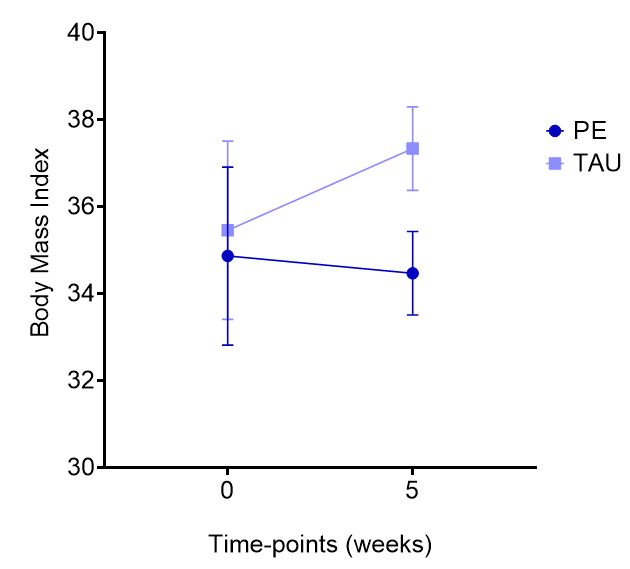
Figure 1. Unadjusted means (95% CI) plot of Body Mass Index (BMI).
Discussion
This study examined the implementation of a perinatal psychoeducation program targeting GDM, integrated to an outpatient service. Findings indicate high feasibility of this psychoeducation intervention for pregnant women with GDM. Psychoeducation recipients appear to benefit from the intervention in keeping their BMI under control, while further evidence are required for mindful eating and pregnancy concerns. Intervention adaptations may be required to achieve improvement in these outcomes.
As hypothesized, this specialized perinatal intervention related to GDM affected positively the BMI of pregnant women who attended the sessions, suggesting efficacy and potential benefits on gestational weight gain of women with GDM. This psychoeducation intervention was adjusted at the procedures of the outpatient clinic, having as primary goal to upgrade self-observation and self-awareness regarding eating habits and affect regulation, in order the suggested lifestyle changes to start during pregnancy and to continue postpartum. Non-pharmacological strategies focusing to alleviate emotional distress by recognizing and regulating dysphoric emotions, through familiarity with affect-regulation and embodiment techniques were effective.
It was crucial to psycho-educate these women with all types of eating and familiarize them with emotional eating management techniques, such as slow down, eat through their senses, check in their hunger, appreciation and other mindful-based and body-centered techniques. Both this study and previous report that the approach of the combination of psychoeducation can facilitate weight loss [22, 26]. The focus needs to be given to a healthy lifestyle and to psychoeducation in order to enhance the ability of self-management skills though adaptation and prevention of relapse regarding emotional eating.
At the same time this perinatal intervention is adjusted towards each woman’s needs, through the adaptation of a psychoeducation into personal healthier lifestyle. By providing personalized information and raising self-observation and self-awareness, rather than proving general information about GDM and gestational weight gain, the impact in BMI is effective and could be longitudinal. Moreover, the presence of a psychologist, as a reference figure, who provides support and personalized intervention may also explain the positive outcome of intervention group. By offering room to the emotional expression, embodiment and cognitive process through the dialogue, the learning of new skills regarding self-observation, self-regulation and self-awareness is enhanced.
On the contrary to the secondary hypothesis, mindful eating and worrying regarding pregnancy were not affected. Over the last 20 years, many studies have confirmed the benefits of mindful eating habits. More specifically, mindfulness and psychoeducation can help in reducing BMI and contribute to the treatment of chronic eating disorders [33]. However, some of the reasons that may explain why this component did not present significance are the small sample size, the short-term intervention and the fact that the “treatment as usual” group scored also high at MEQ.
Moreover, mindful eating is composed by emotional response, by awareness engaging all senses noticing colors, smells, sounds, textures and flavors, by external cues, by distraction and by disinhibition. Therefore, emotional eating management techniques, which was one of the basic psychoeducation aims in order to regulate BMI, is merely one part of it. Consequently, general effect on MEQ may not be possible.
Another aim of psychoeducation was embodiment techniques and self-management skills. These two would necessarily provide effect either on MEQ or CWS. Furthermore, worries about pregnancy were discussed very little, through these five sessions, since the focus was on BMI. Besides, this short-term intervention is a first step towards the psychological support of these pregnant women and simultaneously works as an assessment. In case they may need further psychological support, regarding worries about pregnancy -or any other issue, – they could be referred to secondary or tertiary mental health care.
Limitations
One limitation of the study is the small sample size. A larger sample could explain whether outcome changes were due to intervention’s both effectiveness and ineffectiveness or due to sample’s power deficiency. Thus, this study could be suggested as a pilot study of a future study with greater sample size. Moreover, the duration of the sessions and the whole intervention is restricted, in order the intervention to be adjusted to the regular outpatient clinic of a general hospital and therefore to be more convenient for this group. This setting may provide short term relief, without long-term effect on all the components of MEQ and changes in worries about pregnancy, especially, as GDM high risk pregnancy. In addition, the study was conducted according to self-reported questionnaires, which could provide biased outcomes. MEQ and CWS may not be the accurate questionnaires that report the changes of this intervention. Therefore, other relevant questionnaires may describe more precise the benefits of psychoeducation.
Implications
Further applications are suggested to offer psychological treatment in a specialized outpatient setting, promoting GDM acceptance and healthy lifestyle interventions. Moreover, a support psychoeducation group could provide better outcomes regarding mindful eating and pregnancy worries, since similar queries among members could offer better briefing and emotional sharing. This group could be also enriched with a dietitian, a midwife and a fitness instructor, either through physical or virtual participation. Pre-recorded videos could also provide better outcomes regarding mindful eating and affect regulation, since pregnant women could continually get informed according to their personal needs. Additionally, to those pre-recorded videos, if they need to, they could have online psychological support too. This educational component that promote self-management skills and psychological support can go beyond traditional interventions. Future studies are recommended to explore the impact of integrative programs of both clinical and community health services, including online psychoeducational interventions.
Conclusion
Perinatal psychoeducation intervention focusing on mindful eating and affect regulation helped pregnant women diagnosed with GDM in terms of prevention from gestational weight gain. However, further exploration is required regarding mindful eating and pregnancy concerns.
Funding
No funding.
Disclosure of interest
The authors report no conflicts of interests.
References
- Chiefari E, Arcidiacono B, Foti D, Brunetti A. Gestational diabetes mellitus: an updated overview. J Endocrinol Invest. 2017; 40(9): 899–909. DOI: 10.1007/s40618-016-0607-5.
- Gilbert L, Gross J, Lanzi S, Quansah DY, Puder J, Horsch A. How diet, physical activity and psychosocial well-being interact in women with gestational diabetes mellitus: an integrative review. BMC Pregnancy Childbirth. 2019;19(1):60. DOI: 10.1186/s12884-019-2185-y.
- Craig L, Sims R, Glasziou P, Thomas R. Women’s experiences of a diagnosis of gestational diabetes mellitus: a systematic review. BMC Pregnancy Childbirth. 2020;20:76. DOI: 10.1186/s12884-020-2745-1.
- American Diabetes Association Professional Practice Committee. Diagnosis and classification of diabetes: Standards of Care in Diabetes—2024. Diabetes Care. 2024;47(1):20–42. DOI: 10.2337/dc24-S002.
- Kintiraki E, Goulis DG. Gestational diabetes mellitus: Multi-disciplinary treatment approaches. Metabolism. 2018;86:91–101. DOI: 10.1016/ j.metabol.2018.03.025.
- World Health Organization. WHO recommendations on care for women with diabetes during pregnancy. Geneva: World Health Organization; 2025.
- Delanerolle G, Phiri P, Zeng Y, et al. A systematic review and meta-analysis of gestational diabetes mellitus and mental health among BAME populations. EClinicalMedicine. 2021;38:101016. DOI: 10.1016/j.eclinm.2021.101016.
- Egan AM, Dunne FP, Lydon K, Conneely S, Sarma K, McGuire BE. Diabetes in pregnancy: worse medical outcomes in type 1 diabetes but worse psychological outcomes in gestational diabetes. QJM. 2017; 110(11): 721–7. DOI: 10.1093/ qjmed/hcx106.
- Baz B, Riveline JP, Gautier JF. Gestational diabetes mellitus: definition, aetiological and clinical aspects. Eur J Endocrinol. 2016;174(2):R43–52. DOI: 10.1530/EJE-15-0378.
- Benton M, Silverio SA, Ismail K. “It feels like medically promoted disordered eating”: The psychosocial impact of gestational diabetes mellitus in the perinatal period. PLoS One. 2023;18(7): e0288395. DOI: 10.1371/journal.pone.0288395.
- Arafa A, Dong JY. Gestational diabetes and risk of postpartum depressive symptoms: A meta-analysis of cohort studies. J Affect Disord. 2019; 253: 312–6. DOI: 10.1016/j.jad.2019.05.001.
- Sürücü HA, Besen DB, Duman M, Erbil EY, Ay Ishak. Are levels of coping with stress in pregnancy with gestational diabetes worse than in healthy pregnancy? J Psychosom Obstet Gynaecol. 2019; 40(2): 114–22. DOI: 10.1080/0167482X.2018.1438404.
- OuYang H, Chen B, Abdulrahman M, Li L, Wu N. GDM and anxiety/depression. J Diabetes Res. 2021; 2021: 9959779. DOI: 10.1155/2021/9959779.
- Soni B, Jayaseelan V, Kattimani S, et al. Association between common mental disorder and glycemic control in women with gestational diabetes: A mixed-method study. Indian J Psychiatry. 2023;65(9):941. DOI: 10.4103/indianjpsychiatry.indianjpsychiatry_402_23.
- Alshammari M, Lee RLT, Stubbs M, et al. Effectiveness of psychoeducation interventions for pregnant women with gestational diabetes mellitus: an integrative review. BMC Public Health. 2024; 24:2929. DOI: 10.1186/s12889-024-20428-6.
- Dhillon A, Sparkes E, Duarte R. Mindfulness-based interventions during pregnancy: a systematic review and meta-analysis. Mindfulness. 2017;8. DOI: 10.1007/s12671-017-0726-x.
- Isgut M, Smith AK, Reimann ES, Kucuk O. The impact of psychological distress during pregnancy on the developing fetus: biological mechanisms and benefits of mindfulness interventions. J Perinat Med. 2017;45(9). DOI: 10.1515/jpm-2016-0189.
- Poolsup N, Suksomboon N, Amin M. Effect of treatment of gestational diabetes mellitus: a systematic review and meta-analysis. PLoS One. 2014; 9(3): e92485. DOI: 10.1371/journal.pone.0092485.
- Dubois N, Giroux I. Gestational diabetes mellitus: efficacy of non-pharmacological interventions for management and prevention. Healthcare. 2025; 13(18):2261. DOI: 10.3390/healthcare13182261.
- Xu T, He Y, Dainelli L, et al. Healthcare interventions for the prevention and control of gestational diabetes mellitus in China: a scoping review. BMC Pregnancy Childbirth.2017;17: 171. DOI: 10.1186/s12884-017-1353-1.
- Sushko K, Menezes TH, Strachan P, Butt M, Sherifali D. Self-management education among women with pre-existing diabetes in pregnancy: a scoping review. Int J Nurs Stud. 2021; 117: 103883. DOI: 10.1016/j.ijnurstu.2021.103883.
- Kusinski LC, Tobolska P, Jones DL, et al. Towards novel nutritional strategies in gestational diabetes: eating behaviour and obesity. Nutrients. 2023;15(19):4141. DOI: 10.3390/nu15194141.
- Lesniara-Stachon A, Quansah DY, Schenk S, et al. Brain responses to food viewing in women during pregnancy and postpartum: FOODY Brain Study protocol. BMJ Open. 2023;13:e067013. DOI: 10.1136/bmjopen-2022-067013.
- Vieten C, Laraia BA, Kristeller J, et al. The mindful moms training. BMC Pregnancy Childbirth. 2018; 18:201. DOI: 10.1186/s12884-018-1757-6.
- Mennitto S, Ditto B, Da Costa D. Trait mindfulness and physical/psychological health during pregnancy. J Psychosom Obstet Gynaecol. 2021;42(4): 313–9. DOI: 10.1080/0167482X.2020.1761320.
- Gardner B, Croker H, Barr S, et al. Psychological predictors of dietary intentions in pregnancy. J Hum Nutr Diet. 2012;25(4):345–53. DOI: 10.1111/j.1365-277X.2012.01239.x.
- Youngwanichsetha S, Phumdoung S, Ingkathawornwong T. Effects of mindfulness eating and yoga exercise on blood sugar in GDM. Appl Nurs Res. 2014;27(4):227–30. DOI: 10.1016/j.apnr. 2014.02.002.
- Epel E, Laraia B, Coleman-Phox K, et al. Mindfulness-based intervention effects on distress and glucose control. Int J Behav Med. 2019;26(5): 461–73. DOI: 10.1007/s12529-019-09779-2.
- Marchetti D, Carrozzino D, Fraticelli F, Fulcheri M, Vitacolonna E. Quality of life in GDM: a systematic review. J Diabetes Res. 2017;2017:7058082. DOI: 10.1155/2017/7058082.
- Benton M, Hotung N, Bird J, Ismail K, Silverio SA. The (un)controlled body: stigma in GDM. J Health Psychol. 2025. DOI: 10.1177/ 13591053241241863.
- Çakır GS, Bakhsh MA, Quotah OF, et al. Acceptability of GDM antenatal interventions: qualitative review. BMC Pregnancy Childbirth. 2025;25: 754. DOI: 10.1186/s12884-025-07854-z.
- Jung S, Kim Y, Park J, Choi M, Kim S. Psychosocial support interventions for women with gestational diabetes mellitus: a systematic review. Korean J Women Health Nurs. 2021;27(2):75–92. DOI: 10.4069/kjwhn.2021.05.13.
- Dutra IN, et al. Contributions of mindfulness in high-risk pregnancy: systematic review. Heliyon. 2025;11(11):e43059. DOI: 10.1016/j.heliyon.2025.e43059.
- He J, Wang Y, Liu Y, Chen X, Bai J. Experiences of women with GDM: qualitative protocol. BMJ Open. 2020;10:e034126. DOI: 10.1136/bmjopen-2019-034126.
- Dennison RA, Ward RJ, Griffin SJ, Usher-Smith JA. Women’s views on lifestyle changes post-GDM. Diabet Med. 2019;36(6):702–17. DOI: 10.1111/dme.13926.
- Koptsi I, Tsapekos D, Goulis DG. Adaptation of the mindful eating questionnaire in Greek. Hellenic J Psychol. 2022;19(1):1–22. DOI: 10.26262/hjp. v19i1.7884.
- Framson C, Kristal A, Schenk J, Littman A, Zeliadt S, Benitez D. Development and validation of the Mindful Eating Questionnaire. J Am Diet Assoc. 2009; 109(8): 1439–44. DOI: 10.1016/j.jada. 2009.05.006.
- Gourounti K, Lykeridou K, Taskou C, Kafetsios K, Sandall J. Greek Cambridge Worry Scale validation. Midwifery. 2012;28(6):746–53. DOI: 10.1016/ j.midw.2011.09.004.
- Green JM, Kafetsios K, Statham HE, Snowdon CM. Cambridge Worry Scale psychometrics. J Health Psychol. 2003; 8(6): 753–64. DOI: 10.1177/ 13591053030086008.
- Richardson JTE. Eta squared and partial eta squared in educational research. Educ Res Rev. 2011; 6(2):135–47. DOI: 10.1016/j.edurev. 2010.12.001.
- Faul F, Erdfelder E, Lang AG, Buchner A. G*Power 3: power analysis program. Behav Res Methods. 2007;39:175–91.